
Flagship program
The Archive
In the mid-1970s a man went to his local library because his twelve-year-old son wanted to be a ventriloquist and there was no figure to buy. He found a book by Paul Winchell on carving, followed it, and made one. He named it Butch.
Robert Scott carved for the next forty years. His figures went to Tannen’s in New York, into a Broadway production of Annie, and to performers across the country. He died in 2021. Until his widow wrote to us, almost none of that existed in any record anywhere.
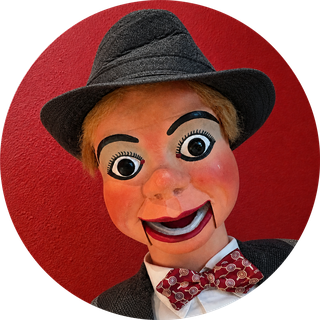
That is what the archive is for. Every fact in it carries the source it came from. Sources are ranked, so a performer’s own account outranks somebody’s recollection of them. Where sources disagree, the disagreement is recorded rather than quietly resolved.
Why it had to be built
I want this to be the largest archive on vent info anywhere. I want it leveraged by people for research and information — people all over the world able to query it.Jimmy Vee, founder
The record of this art is scattered across defunct club newsletters, trade magazines nobody indexed, auction listings, obituaries, and the memories of people who are dying. Much of it is not in English. A great deal of it is held privately, or held publicly but not digitized, which for a researcher is the same thing.
The archive gathers that material, attributes it, and gives it away.
What is in it
Profiles of ventriloquists worldwide; the figures themselves as records in their own right, because a figure has a maker, an owner, a repair history and a life independent of any one performer; the figure makers, whose workshops are the least documented part of the art; the books, films, recordings and television the art has produced; and the institutions, conventions and clubs that carried it.